This overview presents state archives and religious archives in the post-Yugoslav region, with a special focus on church records as a key resource for genealogical research. It highlights major collections, online research opportunities, and access points essential for tracing family histories.
Slovenia
Slovenia offers strong opportunities for genealogical research due to early recordkeeping, good preservation, and increasing digital access. The most important sources include church registers, civil registration records (post-1945), land and cadastral records, population lists, and selected military and administrative files, preserved by both ecclesiastical and state repositories.
Church records
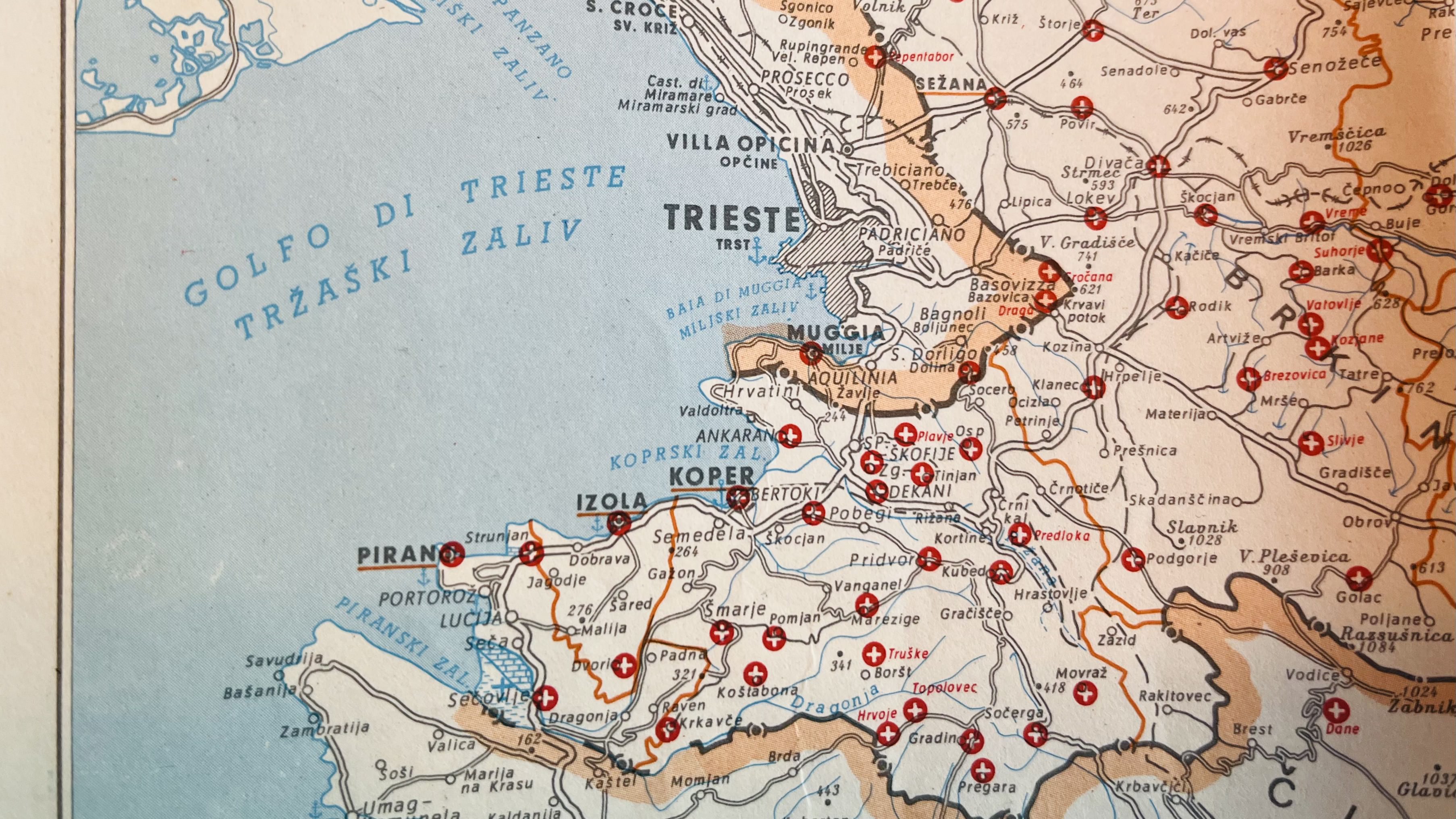
Church registers are the cornerstone of Slovenian genealogy before World War II. Roman Catholic parish registers often begin in the mid-17th century, with some significantly earlier examples in the former Venetian Littoral, where baptismal registers in Piran date from 1458 and in Izola from 1506. In inland regions, such as Upper Carniola (Gorenjska), the oldest preserved registers date from the early 17th century, including the parish of Tržič (1602–1603).
Standardization and consistency improved markedly in the late 18th century following the Josephine reforms, which made the keeping of baptismal, marriage, and burial registers obligatory throughout the Habsburg lands.
◘ A considerable portion of Slovenian parish registers has been digitized and is available online via the Matricula portal, covering many parishes in historical Carniola, Styria, Carinthia, and the Littoral.
◘ Other registers remain accessible through the Archdiocesan Archives in Ljubljana, and Maribor, or through individual parishes.
◘ All known preserved parish registers for the territory of present-day Slovenia have been systematically inventoried in the three-volume repertory Vodnik po matičnih knjigah za območje SR Slovenije (Ljubljana, 1972-’74).
State archives and administrative records
◘ The Archives of the Republic of Slovenia (Arhiv Republike Slovenije) and the regional state archives preserve public and administrative records of genealogical value, including cadastral materials, land registers, court and notarial files, population documentation, and other contextual sources essential for advanced research. Records may appear in Latin, German, Slovene, or Italian, depending on region and period.
◘ In addition, FamilySearch provides an overview of selected online genealogy records from Slovenia and may serve as a supplementary research tool.
Civil registration in the modern sense developed in two phases. Under Habsburg administration, between 1895 and 1918, parish registers in parts of present-day Slovenia were kept in duplicate for civil authorities, creating an early form of state vital registration. A fully secular and uniform civil registration system was introduced after 1945, following the establishment of Socialist Yugoslavia. Postwar birth, marriage, and death records are kept by local registry offices, while older registers are gradually transferred to state and regional archives in accordance with privacy regulations.
Croatia
Croatia possesses some of the most extensive and well-documented genealogical sources in the post-Yugoslav region, thanks to early parish recordkeeping, a structured archival network, and long-term preservation efforts. The primary archival repositories for genealogical research include the Croatian State Archive in Zagreb, its network of regional state archives, and the ecclesiastical archives of major religious communities.
Church records
Roman Catholic parish registers form the backbone of Croatian genealogical research before the mid-20th century and are among the oldest in Southeast Europe. Recordkeeping began earliest in the former Venetian territories along the Adriatic coast. The oldest surviving parish register in Croatia originates from Umag in Istria, beginning in 1483, reflecting the early administrative and ecclesiastical organization of Venetian Dalmatia and Istria. In the Habsburg lands in inland Croatia, recordkeeping was further standardized during the 18th century, particularly following the reforms of Maria Theresa and Joseph II.
Serbian Orthodox parish registers constitute the principal genealogical sources for Orthodox populations in Croatia. Their chronological depth varies considerably by region. One of the earliest preserved Orthodox registers is a baptismal book from Zadar, beginning in 1637. More consistent Orthodox recordkeeping developed during the Habsburg period, particularly from the 18th century onward, following the gradual incorporation of Orthodox parishes into a more regulated ecclesiastical and administrative framework.
Other religious communities also maintained their own registers. Greek Catholic (Uniate) parishes, particularly in northwestern Croatia and Žumberak, kept registers from the 18th century onward. Jewish communities preserved birth, marriage, and death registers mainly from the 19th century. Reformed (Calvinist) and Evangelical (Lutheran) registers exist in smaller numbers, primarily in Slavonia, reflecting historical settlement patterns. Denominational identification is therefore essential for successful research.
◘ Researchers should be aware that parish and civil registers are often dispersed across multiple holding institutions and time periods. For instance, the Serbian Orthodox registers of the Annunciation parish (Sv. Blagovještenje) in Dubrovnik are today divided between the State Archives of Dubrovnik (1791–1876), the civil registry office (1858–1949), and the parish itself (1946 onward).
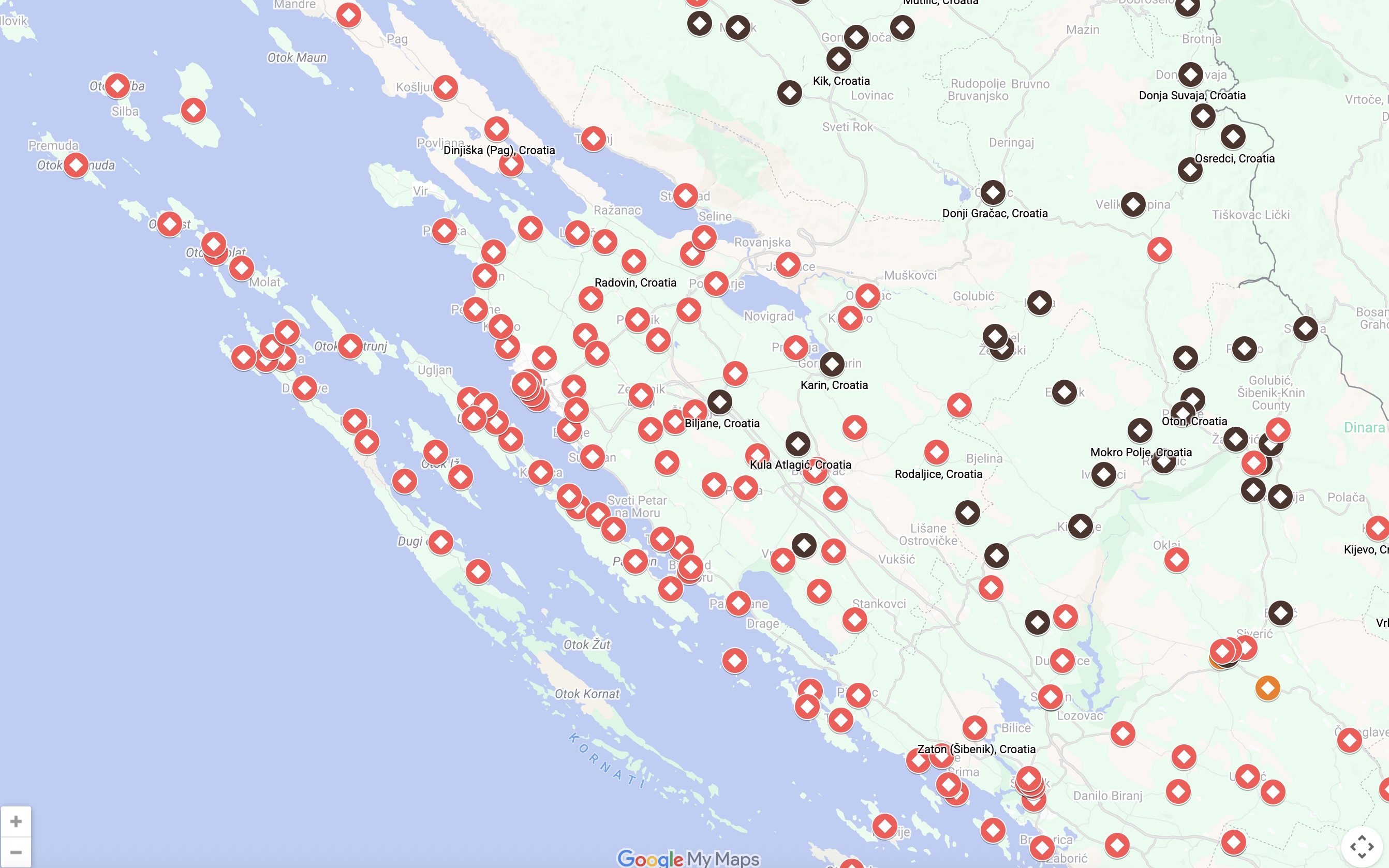
◘ A substantial number of Croatian parish registers — spanning multiple centuries and confessions — have been digitized from microfilms and are accessible in the Croatia, Church Books, 1516–1994 collection on FamilySearch, with over 1.4 million images currently available. These images are derived from microfilms made from originals held at the Croatian State Archives and other repositories. Coverage is however incomplete and uneven: some parishes and time periods are well represented, while others remain available only on site or through regional archives. A comprehensive Google Maps overview of Croatian parish registers was made by Lee Steiner (2024).
State archives and administrative records
◘ The Croatian State Archives (Hrvatski Državni Arhiv, HDA) in Zagreb, founded in 1870, is the central repository for archival records of national importance. It holds a major collection of parish registers and their copies dating from the early 17th century through the mid-20th century. In 1949, all parish registers created before 1860 were ordered to be delivered to the State Archives, and HDA subsequently accumulated a significant collection of both original and copied registers. Today, HDA’s collection comprises approximately 2,864 original parish registers, 718 copies, and additional Status Animarum books, covering Latin, Croatian, Church-Slavonic, Hungarian, German and Hebrew material, with originals dating as early as 1621.
◘ Regional state archives hold parish registers or microfilm copies for their respective territories, along with administrative, cadastral, and demographic records. Many of these regional archives have detailed guides and inventories available through national archival networks like ARHiNET.
- State Archives of Bjelovar (Državni Arhiv u Bjelovaru)
- State Archives of Slavonski Brod (Državni Arhiv u Slavonskom Brodu)
After 1945, civil registration was fully secularized. Parish registers were temporarily confiscated, copied into state civil registers, and in most cases later returned to religious communities. Civil birth, marriage, and death records are now held by local registry offices, with older series gradually transferred to state and regional archives under privacy regulations.
Together, Croatia’s dense archival network, early parish recordkeeping, and surviving multi-confessional sources make it one of the most rewarding—though methodologically demanding—countries for genealogical research in Southeast Europe.
Bosnia & Herzegovina
Bosnia & Herzegovina presents significant challenges for genealogical research due to the late standardization of recordkeeping, complex political and religious structures, and extensive losses caused by wars, fires, and natural disasters. Nevertheless, valuable sources survive, particularly within ecclesiastical archives, which remain the primary custodians of historical vital records.
Church records
Church registers are the most important genealogical sources before the mid-20th century. State archives in Bosnia & Herzegovina generally do not hold original church registers; these are preserved at the level of parishes, monasteries, or diocesan archives, often under difficult material conditions.
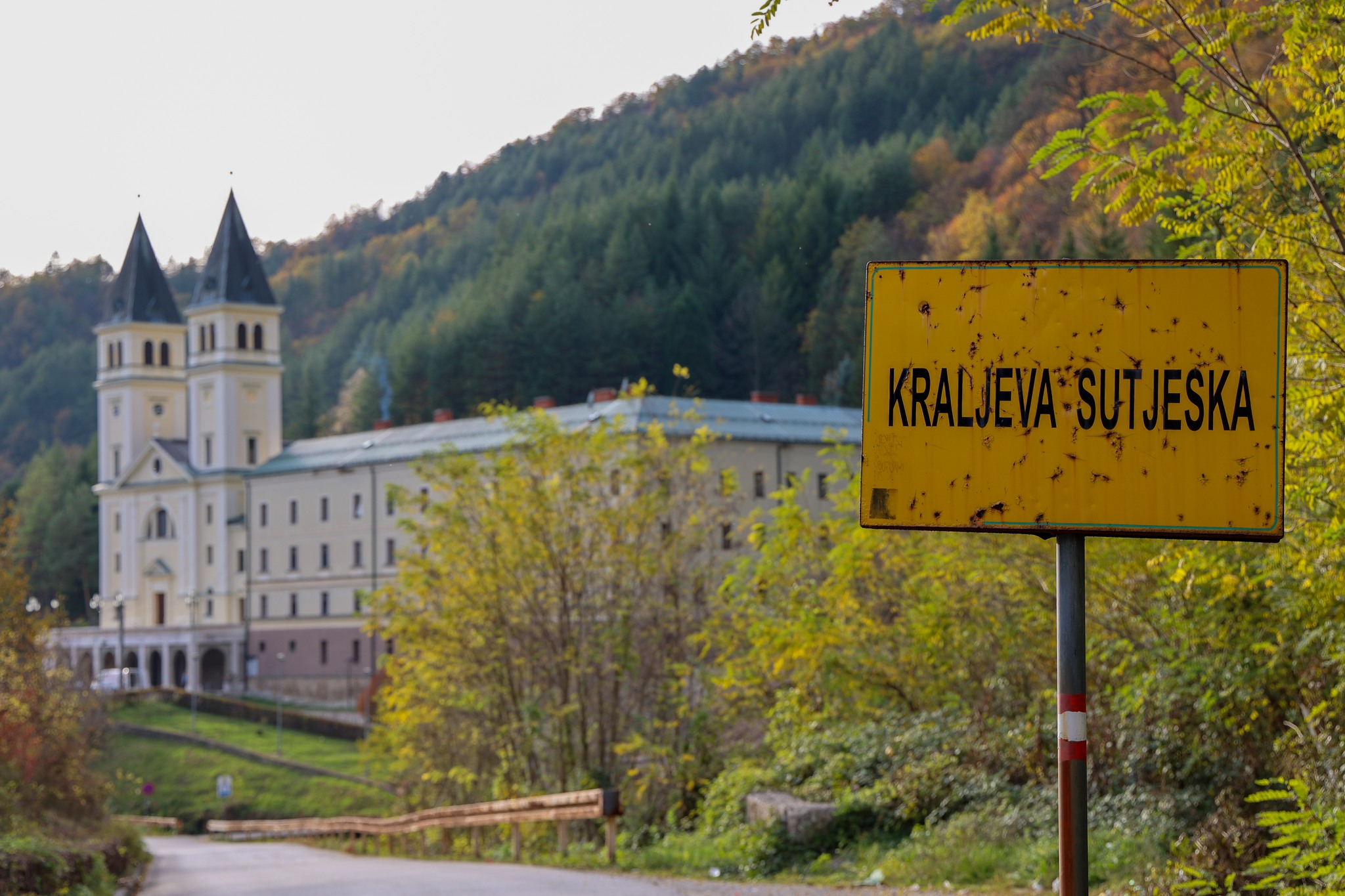
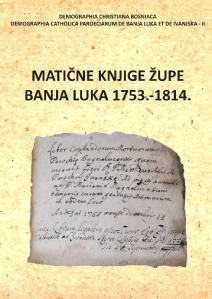 Roman Catholic parish registers are the oldest and most systematically preserved. Bosnian-Croat dioceses and Franciscan monasteries have begun systematically transcribing Catholic parish registers from the Ottoman period, published in the book series Demographia christiana Bosniaca. These registers often date back to the first half of the 18th century, while those of the Franciscan monastery of Kraljeva Sutjeska extend as far back as 1641. Franciscan archives remain crucial for Bosnian Croat (Catholic) genealogy, as annual copies of registers were historically submitted to ecclesiastical authorities, allowing partial reconstruction after losses.
Serbian Orthodox parish registers began to appear sporadically in the mid-19th century under Ottoman rule. One of the earliest surviving registers is preserved at the Old Orthodox Church (Stara saborna crkva) in Sarajevo, where entries begin in 1854. Systematic and legally regulated recordkeeping expanded primarily after 1878, during Austro-Hungarian administration. Orthodox registers are generally preserved at the parish level and, in some cases, within diocesan archives. Many were confiscated by state authorities after World War II for copying into civil registers and were returned unevenly or only decades later, resulting in gaps and discontinuities. Extensive losses occurred during World War II and the conflicts of the 1990s, and coverage varies greatly by region.
The Muslim (Bosniak) population did not maintain systematic parish-style vital registers. Mosque registers generally emerged in the 1920s, during the period of the Kingdom of Yugoslavia. Other relevant materials are preserved in Islamic community archives and in the fonds of Sharia courts. Genealogical research on Bosnian Muslim families often requires a comparative approach rather than reliance on a single record type. An important entry point is the combined analysis of 20th-century mosque registers, Austro-Hungarian land and cadastral registers (gruntovne knjige), and Ottoman population and tax registers (defters) from the Ottoman archives in Istanbul.
- More about sources for Bosniak (Muslim) genealogy in Bosnia & Herzegovina (coming soon)
State archives and administative records
◘ Despite severe archival losses, Bosnia & Herzegovina retains irreplaceable genealogical evidence, particularly within religious archives, which remain indispensable starting points for family history research. Selected collections of genealogical relevance are also preserved in the Archives of Bosnia & Herzegovina (Arhiv Bosne i Hercegovine) and the Historical Archives of Sarajevo (Historijski arhiv Sarajevo), primarily in the form of cadastral, judicial, administrative, and court records.
- More about genealogical sources in state archives of Bosnia & Herzegovina (coming soon)
A fully secular civil registration system was introduced after 1946, when Socialist authorities confiscated church registers, copied them into state records, and established local registry offices. These processes were uneven, resulting in gaps, displacements, and missing series. Most church registers were returned to parishes from the 1980s onwards.
Serbia
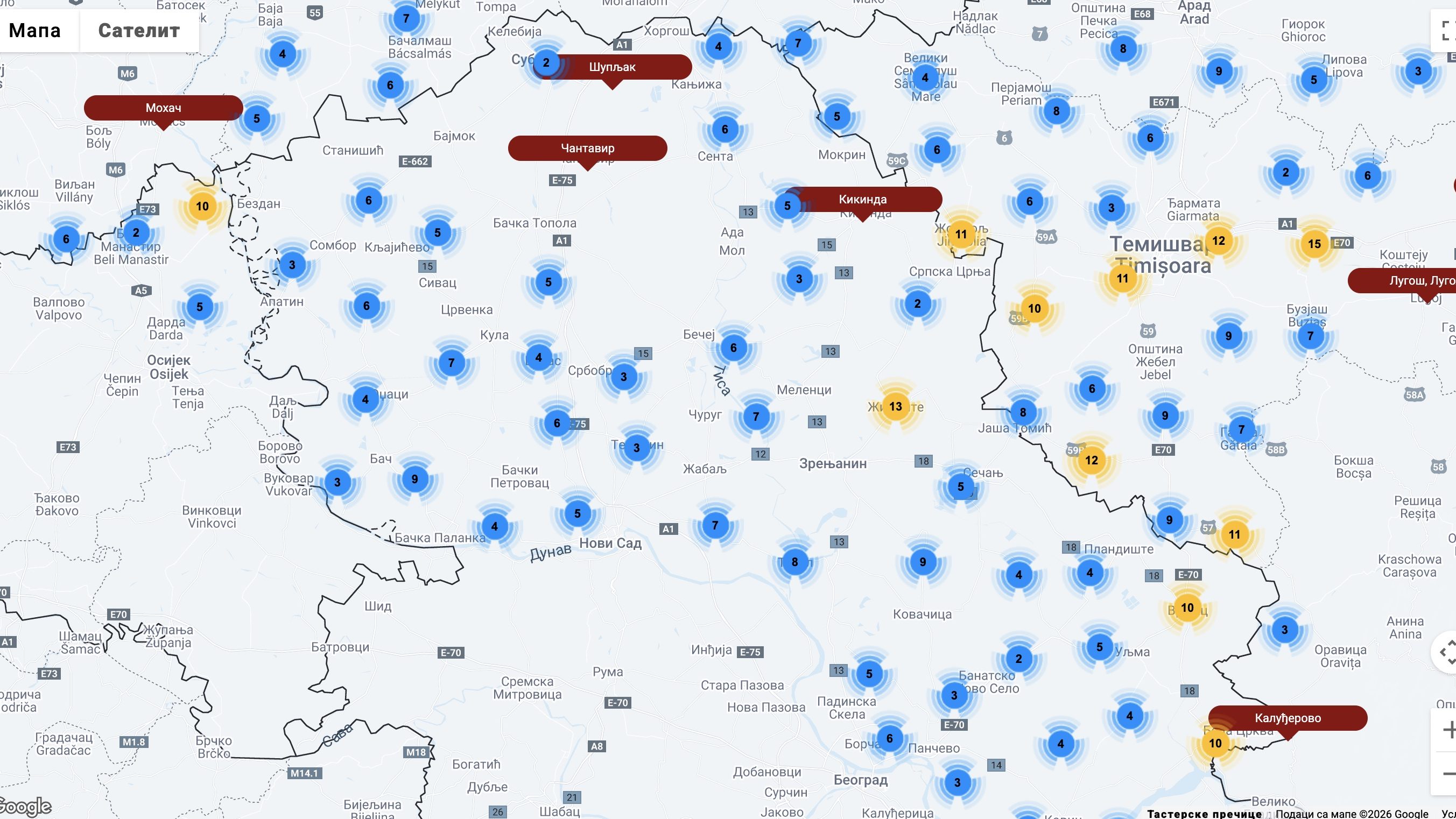
Serbia preserves a broad but regionally uneven body of genealogical sources through the Archives of Serbia in Belgrade, a network of regional and historical archives, and ecclesiastical repositories. Differences in historical administration—Ottoman, Habsburg, and Serbian—strongly influenced the development, format, and survival of records.
Church records
Church registers constitute the primary genealogical source before the introduction of civil registration in 1946, but their development varies widely by region and confession.
The earliest surviving church registers on the territory of present-day Serbia are Roman Catholic. Following the Ottoman retreat and the re-establishment of Catholic institutions under Habsburg administration, Franciscan friars in Subotica began keeping parish registers in 1687. In Vojvodina, then part of the Habsburg Monarchy, Catholic, Orthodox, Protestant, and Jewish communities were gradually incorporated into a regulated ecclesiastical and administrative framework. State oversight increased during the 18th century, culminating in imperial decrees (notably 1784) mandating the keeping of registers for all recognized confessions and, from 1827, the creation of duplicate copies deposited with civil authorities.
Serbian Orthodox parish registers developed more slowly than their Catholic counterparts. Early initiatives date to Austrian rule in northern Serbia (1718–1739), particularly in Belgrade, when Metropolitan Mojsije Petrović instructed Orthodox clergy to begin recording births, marriages, and deaths. A formal directive from 1727 explicitly required priests to keep such records, although survival from this early phase is limited.
More consistent and legally regulated Orthodox recordkeeping expanded in the late 18th century under Habsburg administration in Vojvodina, while in the Principality of Serbia it became mandatory from 1837 onward, following ecclesiastical reorganization and constitutional reforms. In southeastern Serbia, where Ottoman administrative structures persisted longer, continuous Orthodox parish registers generally appear only after 1878, following the incorporation of these territories into the Serbian state.
State archives and administrative records
◘ The Archives of Serbia (Arhiv Srbije) in Belgrade serve as the central repository for records of national importance, primarily from the 19th and early 20th centuries. Although the Archives do not hold church registers, they are indispensable for genealogical research through 19th-century population censuses (especially the comprehensive 1863 census), Ottoman-era defters, citizenship and naturalization files (particularly for immigrants to Serbia), and state employment and personnel records, including annual government directories (Шематизми, 1854–1924).
- More about Archives of Serbia (Arhiv Srbije) (coming soon)
◘ In Serbia, church registers are preserved primarily in regional historical archives, but researchers should be aware that they are frequently dispersed across multiple institutions and time periods. Under more recent regulations, many registers have been returned to the Serbian Orthodox Church; in some cases they were digitized prior to restitution, while in others they were returned without copies, depending on local archival policy and capacity. In parts of central and southern Serbia, some older parish registers may still be held by local civil registry offices. Researchers should therefore always verify the current location and access conditions of specific registers before planning archival work.
◘ Vojvodina offers the most favorable conditions for genealogical research. A significant portion of church registers from the Bačka and Banat regions have been digitized and made available online via www.maticneknjige.org.rs, providing remote access to Catholic, Orthodox, Protestant, and Jewish records.
◘ The Historical Archives of Belgrade (Istorijski Arhiv Beograda) hold 823 church registers (1721–1919) from the wider Belgrade area, of which 494 volumes have been digitized and are accessible online. Additional digitization initiatives exist in other regional archives, including Niš, though coverage remains partial.
- More about archives and church records in Serbia (coming soon)
A fully secular civil registration system was introduced nationwide in 1946. Church registers retained legal status but were taken for copying and transcription; many remained in archives for decades, while others were later returned to ecclesiastical authorities. Post-1946 vital records are held by local civil registry offices.
Montenegro
Montenegro offers a distinctive set of sources for genealogical research shaped by its historical fragmentation between Montenegrin, Austro-Hungarian, and Ottoman administrations. The most important genealogical sources include church registers, early population counts, military and passport records, and postwar civil registration.
Church records
Church registers remain indispensable for research prior to 1946. Serbian Orthodox, Roman Catholic, and Islamic communities each maintained their own records, with the best-preserved and earliest series often found along the coast. In the Principality of Montenegro, the responsibility for keeping registers of births, marriages, and deaths was formally assigned to the church in 1869, although parish registers existed earlier in practice. In areas under Austro-Hungarian rule, particularly along the Adriatic coast, recordkeeping followed Habsburg regulations, while territories formerly under Ottoman administration were subject to different practices.
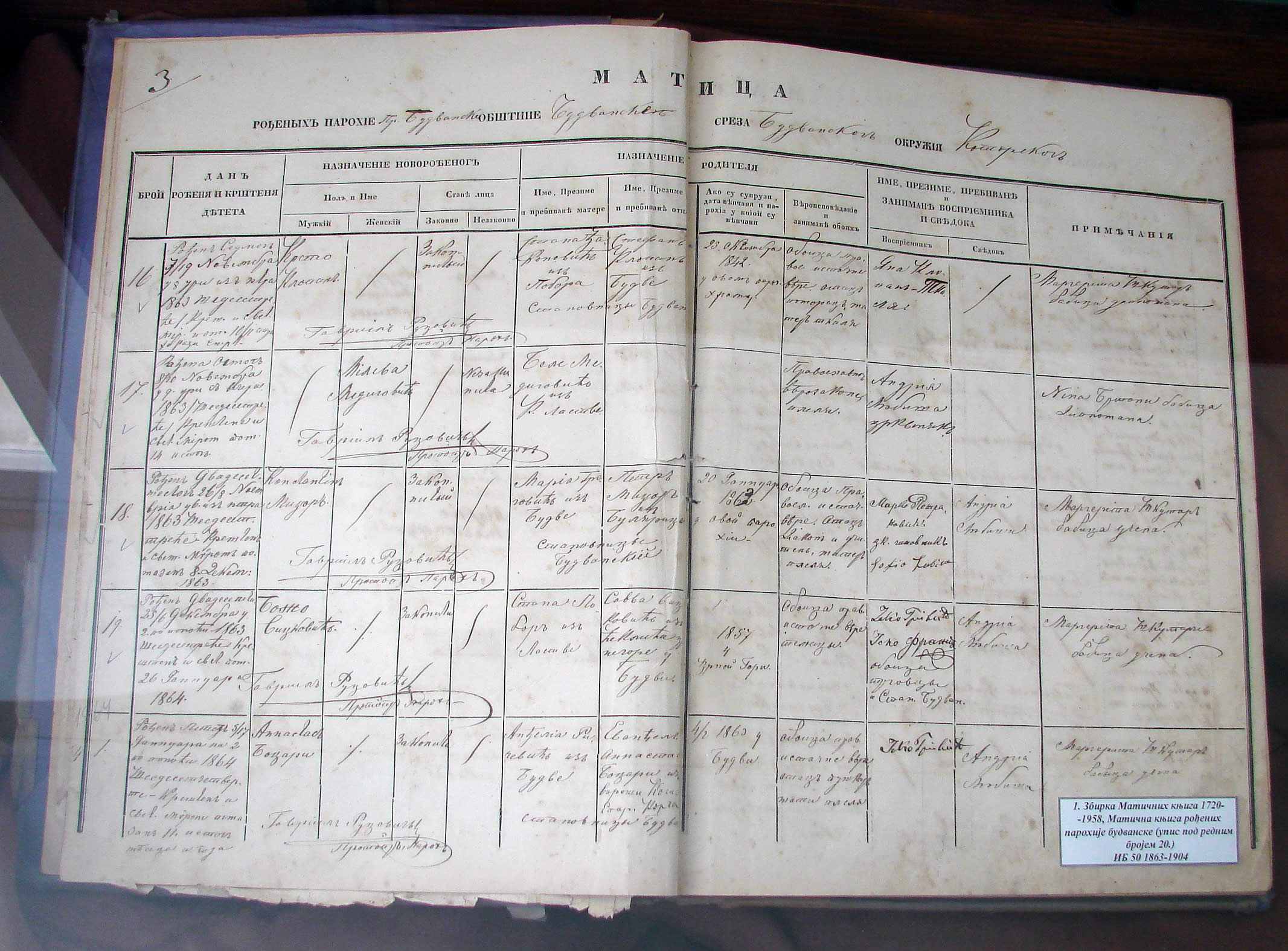
Roman Catholic parish registers along the Montenegrin coast are among the oldest preserved genealogical sources in the country, reflecting the long-standing ecclesiastical organization of the Adriatic littoral. The earliest surviving series originate in the Bay of Kotor (Boka Kotorska), including the parish registers of Perast (1604), Prčanj (1622), Kotor (1624), Budva (1720), and Bar (1738).
Serbian Orthodox parish registers generally begin later and vary widely in continuity and preservation. Isolated evidence suggests that records of births were already being kept in certain communities, such as the Piper tribe, in the early 1800s, although these appear not to have been part of a standardized system. More systematic recordkeeping developed from the late 19th century onward, particularly after the formal organization of dioceses and parishes, though earlier isolated records do exist. Many Orthodox registers suffered losses during both World Wars and the socialist period, when registers were confiscated for copying and not always returned. Surviving material is held in diocesan archives, parish repositories, and in some cases within the State Archives.
Islamic community records, including mosque registers and related documentation, are generally later in origin, starting in the 1920s. Where available, they are held by local Islamic communities or relevant archival fonds and are most useful when combined with civil registers, censuses, and administrative records.
- More about Parish and mosque registers in Montenegro (coming soon)
State archives and administrative records
◘ The State Archives of Montenegro (Državni arhiv Crne Gore), founded in 1951 and headquartered in Cetinje, preserve a range of sources of genealogical value. These include population censuses—most notably the 1879 census, preserved in original volumes and published in transcription—as well as passport registers from the late 19th century, military records, and selected ecclesiastical materials. Regional archival sections in Podgorica and Budva hold additional parish registers, cadastral records, and mixed ecclesiastical–administrative fonds.
- More about genealogical sources in state archives of Montenegro (coming soon)
After World War II, church registers were confiscated by the state, copied into newly established civil registers, and in some cases later returned to their original custodians. A fully secular civil registration system was introduced in 1946, with local registry offices established across the country. Today, historical data from these registers are preserved within the Ministry of the Interior, and much of this material has been digitized, making the Ministry the primary point of contact for postwar vital records.
Macedonia
Genealogical research in North Macedonia is shaped by the country’s complex administrative history, repeated regime changes, and substantial archival losses. Systematic parish-style church registers generally appear later than in neighboring countries.
Church records
Before 1912, Macedonia formed part of the Ottoman Empire. During this period, there was no unified registration system. According to archival researcher Branislav Svetozarević (State Archives of North Macedonia), the oldest preserved parish registers of births, marriages, and deaths generally date from the last decade of the 19th century.
There is currently no definitive proof that systematic parish registers were maintained in Macedonia before the 1890s, although isolated or fragmentary records may survive in individual archives or religious institutions. Ottoman population and tax registers (defters), preserved and published by the State Archives over several decades, remain the principal source for earlier periods. These registers typically enumerate adult males and widows and were compiled for fiscal and administrative purposes rather than family reconstruction.
From 1912 onward, recordkeeping reflects rapid political change: the Balkan Wars, the First World War, and incorporation into the Kingdom of Serbs, Croats and Slovenes (later Yugoslavia). Church, mosque, and state registers exist for this period but are often incomplete. In regional archives (such as Tetovo), researchers have identified death registers from World War I, including records of foreign soldiers who died during epidemics on the Macedonian Front; church and mosque registers from the interwar period; and early civil registration books.
Of particular genealogical value are домовници (household registers), which list families by household and often include names, family relationships, years of birth, occupations (including temporary labor abroad), and migration notes. Although many домовници survive in poor physical condition, they allow partial reconstruction of families born well before the earliest parish registers, sometimes reaching back to individuals born between the 1820s and 1840s.
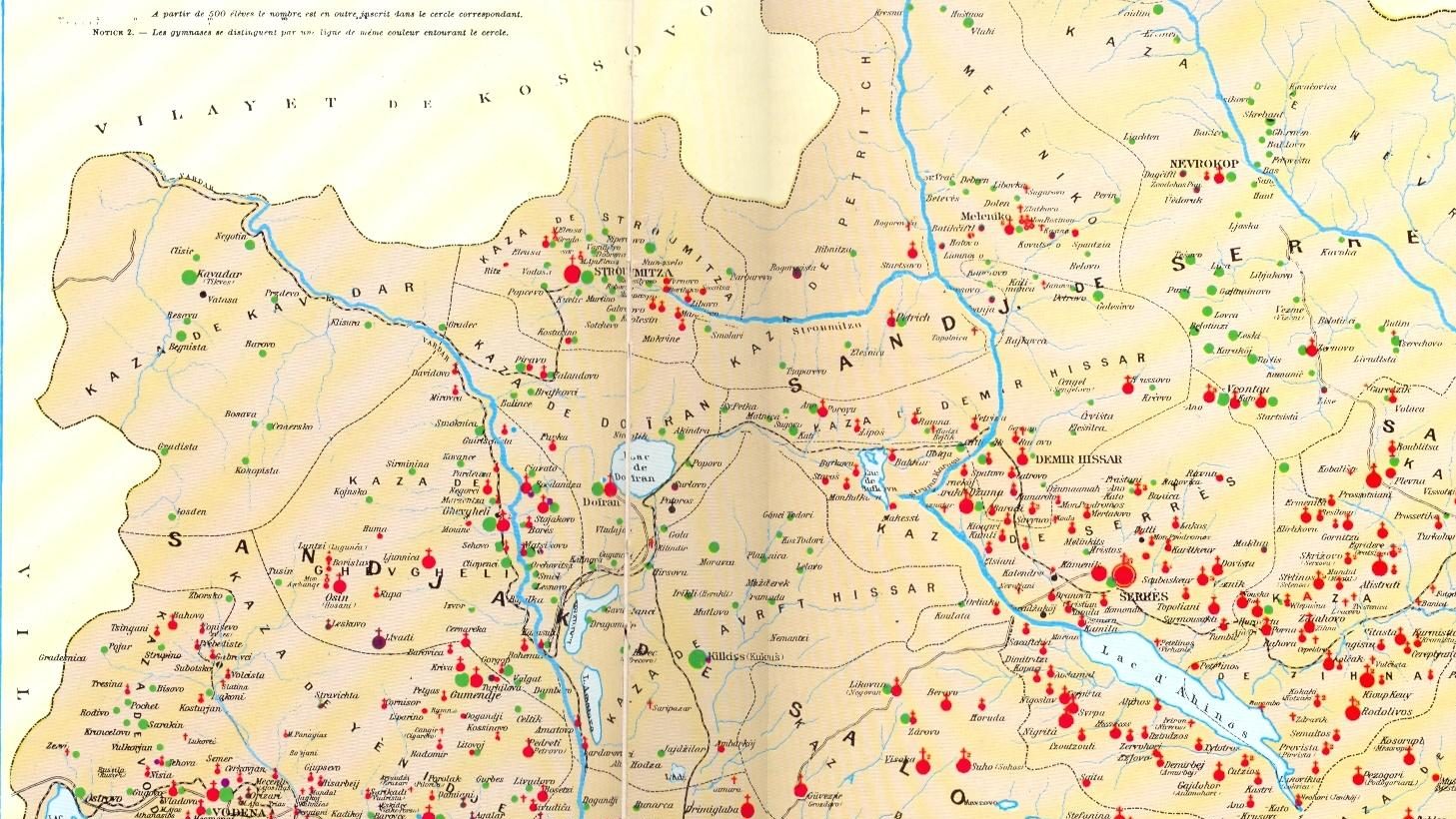
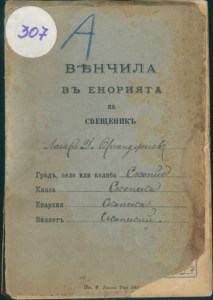 ◘ An important and perhaps overlooked source for Macedonian genealogy is the extensive body of Bulgarian Exarchate parish registers, preserved today in the Central States Archives in the Bulgarian capital Sofia. These collections include parish household registers and marriage registers compiled around 1906 and 1907, covering large parts of Vardar, Aegean, and Pirin Macedonia, as well as Thrace. They document Orthodox Christian families by household and typically record the head of household and family members, age or year of birth, occupation, literacy, temporary labor migration (pečalba), parish, kaza (district), and vilayet.
- More about Parish registers of the Bulgarian Exarchate
State archives and administrative records
◘ The State Archives of the Republic of North Macedonia (Државен Архив на Република Северна Македонија, DARM), together with the Civil Registry Administration (Управа за водење на матични книги), remain the primary custodians of historical population documentation.
Access to archival material is regulated, and foreign researchers must obtain prior permission to consult holdings of the State Archives and civil registry institutions, which should be arranged as an essential first step in any research plan.
In 2025, an initiative led by the United Macedonian Diaspora (UMD) brought together representatives of these institutons to improve coordination and access for descendants of emigrants seeking information about their origins. Discussions included the possibility of digitization projects supported by diaspora organizations, reflecting growing awareness of the demand for ancestry research.
Kosovo
To be added soon.
Albania
To be added soon.
Last edited: 07.01.2026.
 Ex-Yu Genealogy