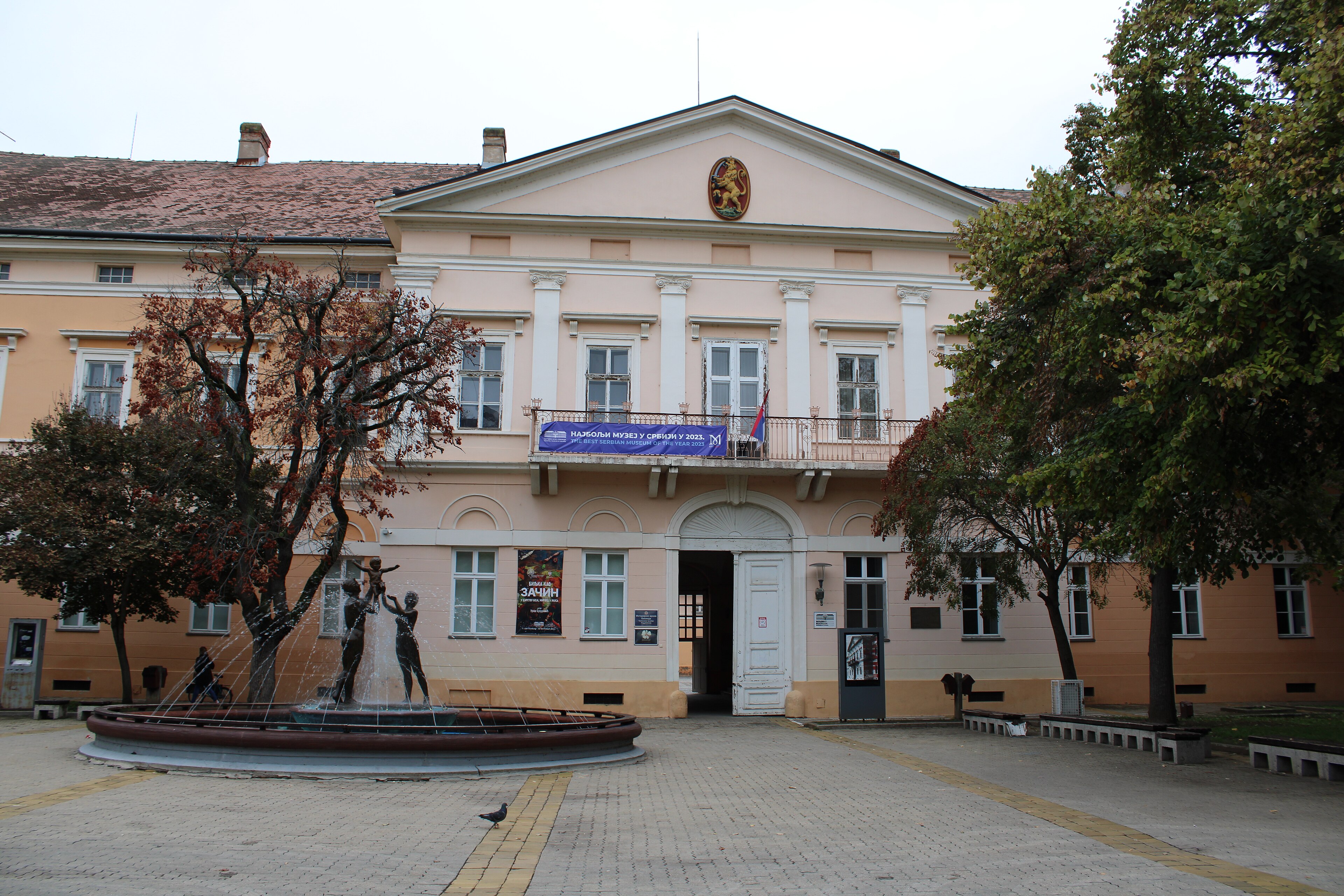
Address: Trg Srpskih Dobrovoljaca 21, Kikinda, Serbia
Telephone: +381 230 422187
Website: www.arhivkikinda.org.rs
E-mail: arhivkikinda@gmail.com
Territorial jurisdiction
The Historical Archive of Kikinda is an inter-municipal archival institution responsible for preserving archival material relating to the northern Banat region of Serbia, particularly the municipalities of Kikinda, Čoka, and Novi Kneževac.
The Archive preserves records of administrative bodies, churches, schools, cultural organizations, economic enterprises, and social institutions that operated within its jurisdiction. According to the Archive’s published overview, the institution currently preserves more than 400 archival fonds and collections, including extensive church and civil registry holdings documenting the multicultural history of northern Banat.
Parish and Civil Registers (Matične knjige)
The Historical Archive of Kikinda preserves church and civil registers (births, marriages, deaths, household registers, and related material) of exceptional importance for genealogical, demographic, and historical research. The collection documents the ethnic, confessional, and social structure of northern Banat from the late 18th century onward, especially among Serbian Orthodox, Roman Catholic, Protestant, Romanian Orthodox, Jewish, German, Hungarian, Slovak, Polish, and Romanian communities.
The Archive currently preserves more than 500 registry books relating to settlements in the municipalities of Kikinda, Čoka, and Novi Kneževac. Holdings include both church registers and state civil registers introduced in the Hungarian part of the Austro-Hungarian Monarchy in 1895. The oldest preserved registers date from the 1770s and concern settlements colonized during the Habsburg period in northern Banat.
Particularly significant are the registers of the “sister villages” of Saint Hubert, Charleville, and Soltur (today part of Banatsko Veliko Selo), founded by French and German colonists from Lorraine and Alsace between 1769 and 1772. The Archive preserves combined birth, marriage, and death registers for these settlements beginning in 1771.
The Archive also preserves valuable material relating to German, Romanian, Jewish, Slovak, Hungarian, and Polish-speaking communities that once lived in northern Banat. In many cases, these registers are the only surviving source documenting communities that disappeared or dispersed during the 20th century. Jewish community registers for Kikinda and neighboring settlements were destroyed during the Second World War, making surviving state registers especially important for reconstructing Jewish family history in the region.
Municipality of Kikinda
The Archive preserves church and civil registers for the town of Kikinda and surrounding villages within the Municipality of Kikinda. Holdings include Orthodox, Roman Catholic, Romanian Orthodox, and state civil registers, with chronological coverage varying by settlement.
Settlements represented include: Kikinda (Velika Kikinda), Sajan, Banatsko Veliko Selo (including the historic settlements of Saint Hubert, Charleville, and Soltur), Bašaid, Rusko Selo, Nakovo, Iđoš, Novi Kozarci (formerly Hajfeld and Mastort), Banatska Topola, Mokrin.
The earliest preserved registers for Kikinda municipality include: Banatsko Veliko Selo (1771–1906),
Novi Kozarci / Hajfeld-Mastort (1789–1936), Nakovo (1790–1928), Rusko Selo (1804–1839), Mokrin (from 1835 onward). The Archive also preserves Romanian Orthodox registers for Rusko Selo, including births (1852–1944), marriages (1853–1939), deaths (1853–1939), and household registers (1853–1930), documenting the now largely vanished Romanian community of the village.
Municipality of Čoka
In 2019 the Municipality of Čoka transferred church and state registry books to the Historical Archive of Kikinda, forming the basis of the Čoka registry books fond (1779–1917). The transferred material includes Orthodox, Roman Catholic, and state civil registers for the multiethnic settlements of the municipality.
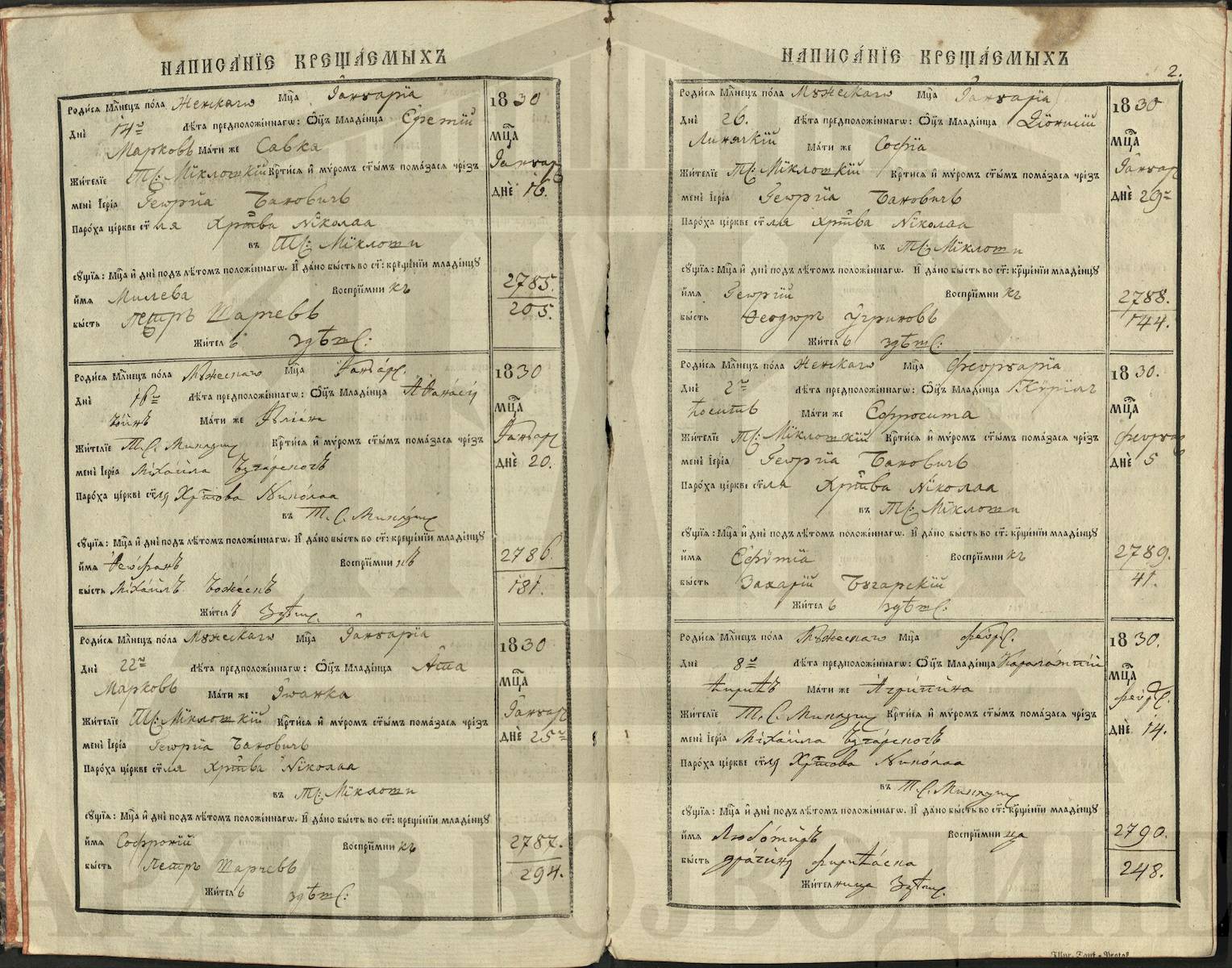
Settlements represented include: Čoka, Ostojićevo, Padej, Sanad, Crna Bara, Jazovo. The oldest preserved registers in the Čoka holdings date from 1779 and include Orthodox birth and death registers for Ostojićevo and Sanad.
The Čoka material is particularly valuable for research into Serbian, Hungarian, German, Jewish, Slovak, and Polish communities. Ostojićevo historically preserved a Protestant Polish minority that gradually adopted the Slovak language while retaining a distinct cultural identity.
Municipality of Novi Kneževac
The Archive preserves state civil registers transferred from the Municipality of Novi Kneževac in 2019, forming the Novi Kneževac registry books fond (1895–1923). Unlike Kikinda and Čoka, the transferred material consists primarily of state civil registers, while many original church registers remain in parish custody.
Settlements represented include: Novi Kneževac (formerly Turska Kanjiža), Jozefovo (later Obilićevo), Majdan, Banatsko Aranđelovo, Srpski Krstur, Đala. Most surviving state registers cover the period from 1895 to the early 20th century.
Preservation and Digitization
Because of their frequent use, many original registers have suffered significant physical deterioration. The Historical Archives of Kikinda has undertaken conservation and digitization efforts to preserve the material and reduce handling of originals.
Since 2016 the Archive has systematically digitized registry books using specialized archival scanning equipment, prioritizing civil and church registers from Kikinda and surrounding villages.
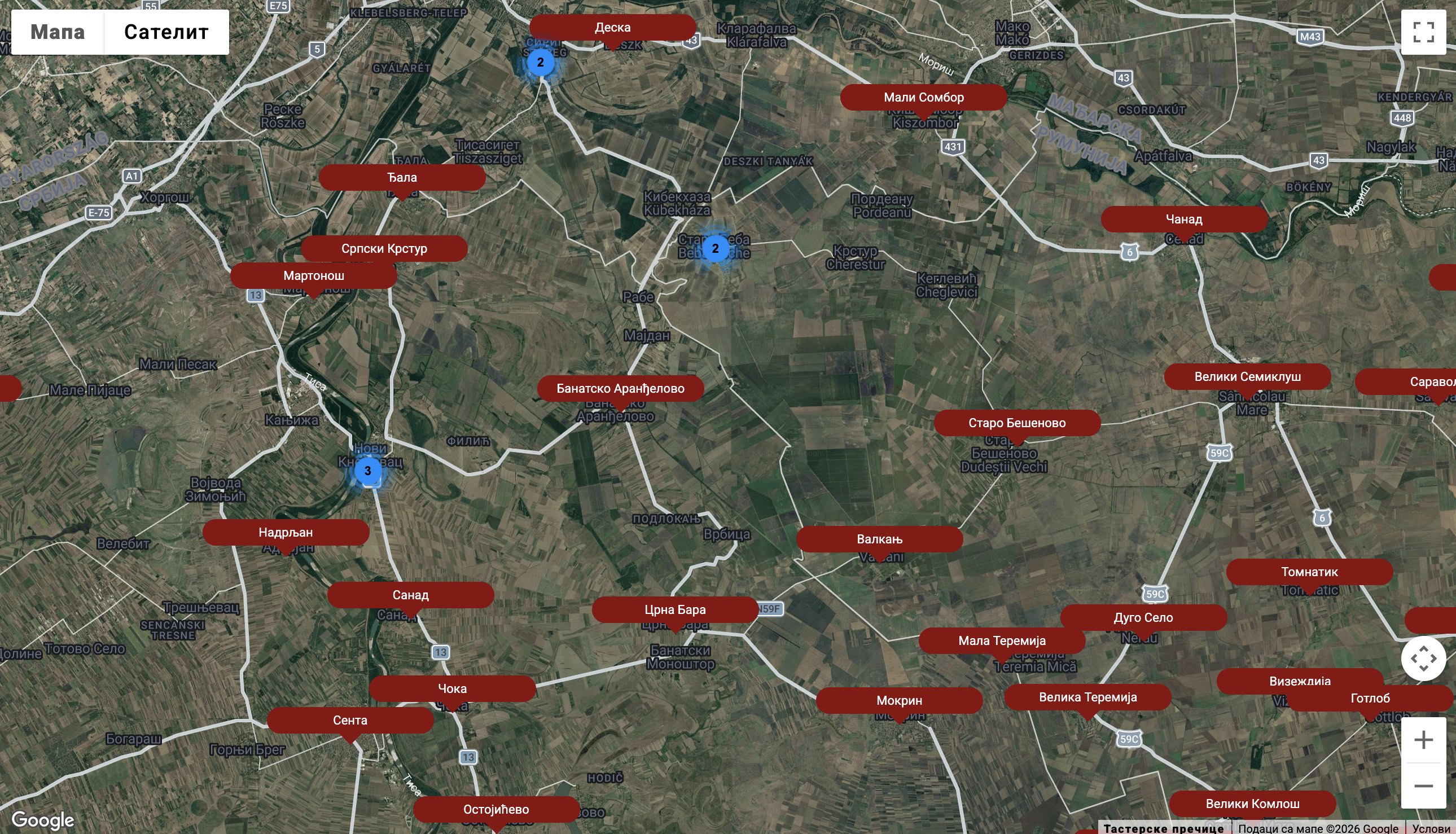
Some digitized copies of the registry books preserved in the Historical Archives of Kikinda are also available online through the Serbian genealogical portal maticneknjige.org.rs.
Source: Srđan Sivčev, Матичне књиге у фондовима Историјског архива Кикинда, Arheon, br. 2 (2019), pp. 131-140.
Last edited: 18.05.2026.

